Cad-Cam Dentistry
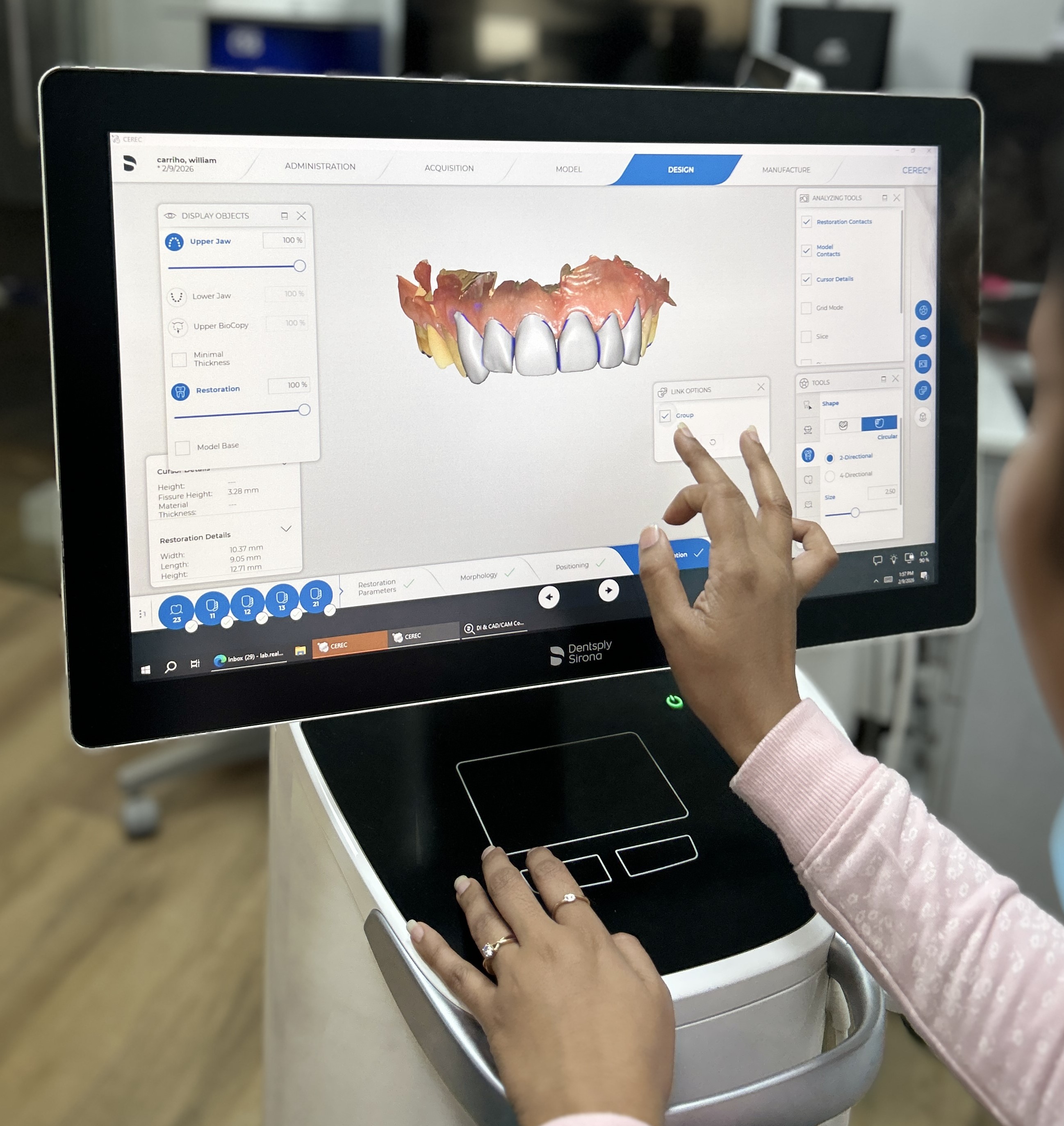
CAD/CAM stands for Computer-Aided Design/Computer-Aided Manufacturing. The computer program displays3-D custom images of teeth and gums, allowing an Expert Dentist to precisely design the tooth restoration with functional and aesthetic characteristics in mind. Once the restoration has been designed by the computer and our dental expert, the information is sent to a sculpting machine (milling) which creates the restoration to the exact specifications of the design through CAM.
The technology is so vast that dental restorations made by CAD/CAM often fit better than those made by hand in a dental lab. At Realtooth, patient satisfaction is being increased simply because they can have their tooth repaired in a single day. One of the most effective uses of CAD/CAM at Realtooth Dental clinic is the same-day porcelain crown, which removes several steps, including using a temporary plastic crown while a permanent crown is made by a laboratory.
Advantages of CAD/CAM technology
- Accuracy of shape prevents gapping between tooth crowns and surrounding teeth.
- Immediate 3D images remove the need for taking time-consuming impressions of teeth.
- Computer sculpting creates a much healthier restoration for the tooth in a matter of minutes.
- Short sculpting time allows the dentist to place your dental restoration during the same visit, instead of requiring two visits.
- CAD/CAM restorations are better-fitting, more durable and more natural looking (multi-colored and translucent, similar to natural teeth) than previously, machined restorations.
In-Office and Dental Laboratory CAD/CAM Options Whitening
Dental CAD/CAM technology is available for dental practices and dental laboratories, enabling dentists and their staff (or a laboratory technician) to design restorations on a computer screen. The CAD/CAM computer displays a 3-D custom image of your prepared tooth or teeth obtained by digitally capturing the preparations with an optical scanner. Alternatively, the 3-D images can be obtained by scanning a traditional model obtained from conventional impressions of the preparations.
The dentist or laboratory technician then uses those 3-D images and CAD software to draw and design the final restoration. The amount of time taken by the dentist, in-office restoration designer or laboratory technician to design a restoration varies based on skill, experience, and complexity of case and treatment. Some cases could take minutes, while others could require a half- an hour or more of design time to ensure quality.
Once the final restoration is designed, the crown, inlay, on lay, veneer or bridge is milled from a single block of ceramic material in a milling chamber. The restoration then can be customized with stains and glazes to create a more natural look, before being fired in an oven (similar to ceramics and pottery), and then finished and polished.
Benefits of CAD/CAM
Dentistry Research suggests that today’s milled CAD/CAM restorations are stronger than those milled from earlier materials.
Special Considerations of CAD/CAM in dentistry
CAD/CAM technology is not a replacement for the accuracy and talent provided by a dentist or dental laboratory technician. Dentists must be precise in creating the initial tooth preparation; both dentists and laboratory technicians must be accurate when taking the digital impression and drawing the restoration.
Equally important is the accuracy and skill with which they design a restoration, particularly since the fit of a restoration is critical for preventing future tooth damage. For example, an ill-fitted crown, veneer, inlays or on lay can leave space between the teeth, or between the tooth preparation and the restoration. This could lead to an increased risk of infection or disease.
When to choose CAD/CAM Dentistry
Not every tooth can be treated with a CAD/CAM restoration. Our Dental Expert will determine if a CAD/CAM restoration is among the appropriate treatment options as per patient’s condition. Additionally, despite improvements in the aesthetics of CAD/CAM materials, patient may find that some CAD/CAM restorations look too opaque and lack natural characterizations.
Depending on the type of restoration needed (such as inlays/on lays), our dentist may prefer conventional laboratory fabrication techniques that have a longer and more proven track record for accuracy of fit. Therefore, patients must discuss their particular situation and desires with their dentist, who will make the final treatment decision based on an examination.
We at Realtooth Best Dental Clinic in Lucknow, Provide you the best Cosmetic Dentistry in Lucknow. You can consult with an expert dentist at our any of the dental clinic.