Dentures at Realtooth
Replace Missing Teeth Restore Chewing Rebuild Confidence
Losing several or all teeth can affect much more than appearance.
Tooth Loss Can Affect:
Losing teeth impacts daily function, health, and well-being in multiple ways:
- Chewing ability & Nutrition
- Speech
- Facial support
- confidence & Social comfort
- Overall quality of life
We aim to restore function, facial support, comfort, and a natural-looking smile according to your individual needs.
Modern Replacement Solutions
Explored and customized at RealtoothOur objective is not simply to replace missing teeth, but to build a lasting, functional solution.
What Is a Denture?
A denture is a removable dental prosthesis designed to replace missing teeth and surrounding tissues.
Depending on the number of teeth missing, a denture may replace:
- A few teeth
- Several teeth
- All teeth in the upper jaw
- All teeth in the lower jaw
- Teeth in both jaws
Dentures may obtain support from:
- Gums
- Remaining natural teeth
- Dental implants
- A combination of these
The appropriate design depends on the condition of the mouth, remaining teeth, bone, bite, and individual patient expectations.
Which Type of Denture Is Right for Me?
There is no single denture that suits every patient. At Realtooth, we consider several options based on your individual needs.
Complete Dentures
For patients missing all teeth in one or both jawsDesigned for patients who have lost all teeth in one or both jaws. A good denture is custom designed around the patient—not selected from a standard tooth arrangement.
- Chewing & Speech
- Smile & Display
- Lip & Facial Support
- Jaw Relationship
- Precision Fit & Bite
- Tooth Position & Line
- Facial Support & Speech
- Overall Stability
Partial Dentures
When some natural teeth still remainReplaces some missing teeth while natural teeth remain. Partial dentures can be designed in different materials and configurations according to remaining teeth and bite.
- Several teeth missing
- Fixed bridge not ideal
- Implants not preferred
- Economical solution
- Preserves existing teeth
- Multiple material choices
- Custom bite adaptation
- Easy to clean & maintain
Cast Partial Dentures
Precision-designed metal framework supportUses a precision-designed metal framework to support replacement teeth. Suitability depends on the condition and position of remaining natural teeth.
- Greater rigidity
- Improved strength
- Better support control
- Reduced bulkiness
- Predictable force load
- Long-term durability
- High structural stability
- Custom metal precision
Flexible Dentures
Flexible base material for partial tooth replacementUses a more flexible base material for selected partial replacement cases. Material selection follows clinical need rather than appearance alone.
- Less visible clasping
- Flexible adaptation
- Improved aesthetics
- Lightweight design
- Number of missing teeth
- Bite & gum support
- Remaining teeth state
- Maintenance needs
Immediate Dentures
Prepared before extraction & inserted immediatelyAllows patients to avoid remaining without teeth during the healing period. Immediate dentures are part of a transitional phase rather than a final long-term prosthesis.
- Immediate appearance
- Facial support
- Functional chewing
- Social confidence
- Gums & bone change
- Periodic adjustments
- Reline required
- Later modification
Implant-Supported Overdentures
Attaches to dental implants for maximum stabilityRemovable by the patient but attaches securely to implants. Offers an important middle ground between conventional removable dentures and fixed implant teeth.
- Loose, shifting dentures
- Lower denture movement
- Difficulty in speaking
- Reduced chewing power
- Superior retention
- Chewing confidence
- Easy daily cleaning
- Enhanced comfort
Fixed Implant Teeth vs Implant Overdenture
Implant Overdenture
- Removable by the patient
- Retained securely by implants
- Generally easier to clean & maintain
- Provides excellent stability & comfort
- May require fewer implants depending on case
Fixed Implant Teeth
- Remains fixed for routine daily use
- Supported by multiple dental implants
- Requires specialized cleaning underneath
- Involves more complex surgical planning
- Feels & functions like natural permanent teeth
Realtooth helps patients compare the clinical, functional, maintenance, and financial implications of both approaches.
Realtooth USP: Digital Dentures
Traditional denture fabrication depends on several physical impressions, records and laboratory stages. Modern digital dentistry allows many of these stages to be integrated into a digital workflow.
At Realtooth, selected denture cases may incorporate:
This allows denture treatment to move from a purely analogue process toward a more reproducible digital workflow.

What Is a CAD-CAM Denture?
CAD-CAM stands for Computer-Aided Design & Computer-Aided Manufacturing. In a CAD-CAM denture workflow, the denture is digitally designed and manufactured using computer-controlled processes for greater control over design and reproducibility.
Clinical Assessment
Initial evaluation of mouth, gums, remaining teeth, and patient expectations.
Digital / Conventional Records
Capturing precise intraoral scans or impression records for computer modeling.
Digital Denture Design
Custom virtual designing of the denture base and facial support parameters.
Computer-Aided Tooth Arrangement
Virtual placement and alignment of teeth for optimal bite and aesthetics.
CAD-CAM Manufacturing
High-precision milling or processing using computer-controlled systems.
Clinical Trial / Verification
Testing fit, bite, aesthetics, and comfort before final completion.
Final Denture Delivery
Placement of the finished CAD-CAM denture with personalized usage instructions.
Realtooth USP: Digital Denture Records
One particularly valuable feature of digital denture workflows is the ability to retain digital design information.
If the clinical condition remains suitable, retaining digital design data can potentially help with:
- Future replacement
- Reproduction of an existing denture design
- Modification
- Communication between clinician and digital laboratory
- Maintaining a digital record of tooth arrangement and prosthetic design
A denture should not disappear into the laboratory process. Its design should become part of the patient's long-term dental record.
Why Digital Dentures Can Be Valuable
Depending on the case and workflow, digital denture fabrication offers significant clinical and patient advantages.
Digital denture fabrication may offer benefits such : as
- Greater design consistency
- Improved reproducibility
- Digital storage of denture records
- Efficient clinical-laboratory communication
- More controlled tooth positioning
- Reduced dependence on some conventional steps
- Accelerated treatment in selected situations
However, technology does not eliminate the need for :
- Accurate diagnosis
- Good jaw relationship records
- Proper bite alignment
- Appropriate border extension
- Precise clinical adjustments
- Patient adaptation & follow-up
Note: Digital dentistry improves the workflow. Clinical judgement still determines the success.
Realtooth USP: Customised Denture Design
A denture should not simply contain a standard set of teeth. We craft personalized solutions tailored to your unique anatomical and aesthetic needs.
The arrangement of your teeth can be customized according to:
Aesthetic goals tailored to your personal style:
-
Highly Natural & Understated Subtle, age-appropriate characteristics.
-
Brighter & More Youthful Vibrant shade selection with rejuvenated support.
There should not be one "Realtooth denture smile." There should be a denture designed specifically for your face.
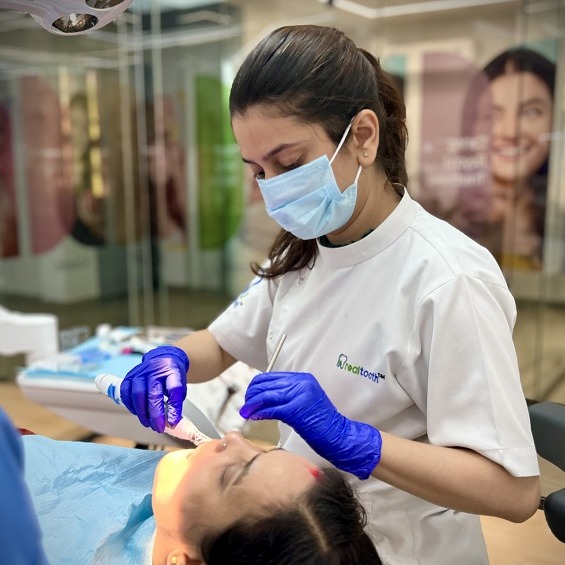
Facial Support Matters
When teeth have been missing for a long time, changes can occur in:
- Lip support & fullness
- Lower facial height
- Cheek support & contours
- Jaw relationship & alignment
Dentures do more than replace teeth. Correct tooth positioning and denture contours can help restore appropriate:
- Natural facial balance
- Lip and facial support
- Overall youthful appearance
- Speech & phonetics
This is why denture treatment should consider the face as well as the mouth.
Bite Matters in Dentures
The relationship between the upper and lower dentures must be carefully planned for long-term comfort and function.
An Unstable Bite Can Contribute To:
Issues caused by improper alignment-
Denture Movement
-
Difficulty Chewing
-
Sore Areas & Friction
-
Repeated Fracture & Uneven Pressure
-
Poor Tissue Adaptation
What Realtooth Evaluates:
Precision parameters for accurate bite-
Jaw Relationship
-
Vertical Dimension
-
Tooth Contacts
-
Chewing Pattern
-
Overall Prosthetic Stability
Good-looking teeth without a stable bite do not make a successful denture.

Why Lower Dentures Often Feel Less Stable
Lower complete dentures are often more difficult for patients to adapt to due to key anatomical challenges:
If a lower denture repeatedly moves despite reasonable conventional treatment, implant retention may be worth discussing.
For Selected Patients: A number of strategically placed implants can significantly change the denture experience.
What If I Have Been Wearing the Same Denture for Years?
Dentures are not lifetime appliances. Your mouth changes naturally over time, and your prosthesis requires periodic review.
Changes That Occur Over Time
Why older dentures stop functioning well-
Gum & Bone Shape Changes Natural resorption alters the foundation shape.
-
Worn Prosthetic Teeth & Bite Alteration Chewing surfaces wear down, changing vertical height.
-
Deteriorating Fit & Reduced Facial Support Loose dentures cause sunken lips and cheeks.
-
Risk of Fractures & Hygiene Challenges Material fatigue and micro-cracks retain bacterial build-up.
When to Consider a Review
Key signs your denture needs assessmentRegular clinical evaluations help determine whether a denture needs minor adjustment, relining, or replacement.
Denture Relining and Adjustment
Not every loose denture immediately needs complete replacement.
Depending on the condition, options may include:
- Implant placement
- Relining
- Repair
- Modification
- Replacement
The dentist first determines whether the problem lies in:
- Fit
- Bite
- Wear
- Bone change
- Denture design
Denture Repair & Fracture Care
Accidental damage or fractures require careful evaluation to restore function and prevent future breakage.
Dentures May Fracture Because Of:
Clinical Insight
In selected situations, immediate repair may be possible to restore your denture's integrity.
Repeated fractures may indicate an underlying design, fit, or bite problem that should be thoroughly investigated rather than just repaired.
Dentures After Multiple Extractions
Planning before extractions can make the transition significantly more comfortable and stress-free.
Pre-Extraction Records
Capturing bite, tooth shade, and facial profiles.
Immediate Denture
Placed on the same day as extractions.
Healing Phase
Allowing gum tissue and jawbone adaptation.
Denture Adjustments
Periodic relining and fitting adjustments.
Definitive Denture / Implants
Final long-term prosthetic or implant-supported solution.
Proper pre-planning ensures that function, speech, and appearance are protected throughout every stage of your healing journey.
Dentures for Senior Patients
For older adults, denture treatment should consider:
At Realtooth, treatment is designed according to both clinical need and real-life usability.
The Realtooth Denture Workflow
Our step-by-step approach to personalized denture care and treatment.
Step 1 – Comprehensive Consultation
We understand:
- Which teeth are missing
- Current denture problems
- Chewing concerns
- Appearance expectations
- Medical history
- Previous dental treatment
Step 2 – Oral Assessment
We evaluate:
- Remaining teeth
- Gums
- Bone and ridges
- Existing dentures
- Jaw relationship
- Bite
Step 3 – Discuss Replacement Options
We may compare:
- Complete denture
- Partial denture
- Cast partial denture
- Flexible denture
- Implant overdenture
- Fixed implant teeth
Step 4 – Records
Depending on the chosen treatment, records may include:
- Conventional impressions
- Digital intraoral scans
- Photographs
- Bite records
- X-rays
- CBCT for implant cases
Step 5 – Smile & Tooth Planning
We consider:
- Tooth size
- Tooth shape
- Shade
- Smile line
- Lip support
- Facial appearance
Step 6 – Digital / Conventional Design
The denture is designed using the workflow appropriate to the case.
Selected cases may enter a CAD-CAM or digital denture pathway.
Step 7 – Trial and Verification
Before finalisation, the team may evaluate:
- Tooth position
- Bite
- Smile
- Speech
- Facial support
Step 8 – Denture Delivery
The final prosthesis is fitted and assessed for comfort and function.
Step 9 – Adjustment
New dentures commonly require adaptation.
Follow-up allows the team to identify and adjust pressure areas or bite concerns.
Step 10 – Maintenance
Patients receive guidance regarding:
- Cleaning
- Night-time denture care
- Gum health
- Recall
- Periodic denture assessment
How Long Does It Take to Get Used to New Dentures?
New dentures require adaptation
Initially, some patients may experience:
Increased saliva
Mild speech changes
Awareness of the denture
Difficulty with certain foods
Minor pressure points
Adaptation usually improves with practice and appropriate adjustments.
Patients should report persistent pain or ulceration rather than simply accepting discomfort.
Eating With New Dentures
During early adaptation:
As confidence improves, diet can usually be expanded according to clinical guidance.
Implant-retained dentures may provide greater stability for selected patients.
How Should Dentures Be Cleaned?
Dentures can accumulate:
- Plaque
- Food
- Stains
- Calculus
- Microbial deposits
Patients should:
- Clean the denture daily
- Clean gums and tongue
- Follow recommended soaking instructions
- Avoid damaging abrasive materials
- Maintain remaining natural teeth carefully
- Attend periodic dental reviews
Your Realtooth team will recommend a cleaning routine according to your denture type.
Should I Sleep With My Dentures?
In many situations, removing dentures for a period at night allows the supporting tissues to rest and provides an opportunity to clean the denture thoroughly.
Your dentist will advise you according to your specific prosthesis and clinical condition.
Why Choose Realtooth for Dentures?
Comprehensive, tech-driven, and patient-centric denture care tailored to your needs.
Multiple Denture Options
We provide conventional and advanced solutions rather than offering every patient the same type of denture.
Digital Denture Capability
Selected cases can use modern digital scanning and computer-aided denture workflows.
CAD-CAM Dentures
Computer-aided design and manufacturing can be incorporated where clinically appropriate.
In-House Digital Ecosystem
Realtooth's wider digital infrastructure supports scanning, CAD design, CAD-CAM manufacturing, and 3D-printing workflows.
Customised Smile Design
Tooth arrangement, shade, and facial support are planned around the individual patient.
Bite-Focused Planning
We consider chewing and jaw relationship—not simply the appearance of the denture teeth.
Implant Expertise
Patients struggling with loose dentures can be evaluated for implant-retained and implant-supported alternatives.
Global Implant Systems
Where implant retention is required, Realtooth has access to established global implant systems according to treatment needs.
Long-Term Maintenance
We support adjustment, hygiene, recall, and future modification rather than treating denture delivery as the end of care.
Multispeciality Team
Denture treatment is coordinated seamlessly within one unified treatment system.
- Prosthodontics
- Implant dentistry
- Oral surgery
- Periodontal care
- Restorative dentistry
Conventional Denture vs Digital Denture vs Implant Denture
| Option | Main Support | Key Advantage |
|---|---|---|
| Conventional Complete Denture | Gums and underlying tissues | Non-surgical tooth replacement |
| Partial Denture | Teeth + gums | Replaces selected missing teeth |
| Cast Partial Denture | Remaining teeth + framework | Strength and controlled support |
| Flexible Denture | Teeth + gums | Aesthetic removable option in selected cases |
| Digital / CAD-CAM Denture | Gums with digitally designed prosthesis | Digital design and reproducibility |
| Implant Overdenture | Dental implants + gums | Greater retention while remaining removable |
| Fixed Implant Teeth | Dental implants | Fixed full-arch rehabilitation |
Frequently Asked Questions
What Determines Denture Cost?
Cost depends on:
- Number of teeth being replaced
- Complete vs partial denture
- Material selected (Acrylic, BPS, Flexible)
- Conventional vs digital workflow
- CAD-CAM design requirements
- Number of clinical stages involved
- Implant support requirement
- Quality of implant components
- Complexity of the bite & jaw relationship
- Customisation required for natural smile