Periodontics & Advanced Gum Care at Realtooth
Healthy Gums Are the Foundation Are the Foundation of Every Healthy Smile
Teeth are only one part of dentistry. The gums, bone and supporting tissues around the teeth—and around dental implants—play a major role in overall oral stability.
Periodontics is the branch of dentistry focused on the prevention, diagnosis and treatment of conditions affecting the gums and supporting structures of the teeth.
At Realtooth, Periodontics is not treated as an isolated speciality. It is an integral part of our comprehensive dental workflow—sometimes as the primary treatment a patient needs, sometimes as a supporting treatment before another procedure, and often as a long-term preventive and maintenance programme after complex dentistry.
Healthy teeth need healthy foundations. Advanced dentistry becomes predictable only when those foundations are protected.
Periodontics at Realtooth: Three Important Roles
Periodontal care can enter a patient's dental journey in three different ways.
1. As a Treatment in Itself
For patients experiencing periodontal problems, gum treatment may be the main dental treatment required.
- Bleeding gums
- Gum swelling
- Bad breath
- Gum recession
- Loose teeth
- Gum infection
- Bone loss
- Periodontitis
2. As a Supporting Treatment
Healthy gums may need to be established before complex restorative, cosmetic, implant, or orthodontic treatment.
- Dental implants
- Veneers
- Smile design
- Crowns
- Bridges
- Full-mouth rehabilitation
- Orthodontics
- Clear aligners
- Restorative dentistry
3. As Preventive & Maintenance Therapy
After successful dental treatment, periodontal care helps protect the health and longevity of the treatment result.
- Natural teeth
- Dental implants
- Crowns
- Bridges
- Full-mouth restorations
- Cosmetic dentistry
Treat disease. Support complex dentistry. Maintain the result.
What Is Gum Disease?
Gum disease develops when bacterial plaque and the body's inflammatory response begin affecting the tissues supporting the teeth.
It exists across different levels of severity.
Gingivitis
The early stage of gum disease may involve:
- Red gums
- Swelling
- Bleeding while brushing
- Plaque and calculus
At this stage, damage to the supporting bone may not yet have occurred.
Periodontitis
When disease progresses deeper, it can affect the structures that support the teeth.
- Deep gum pockets
- Gum recession
- Bone loss
- Tooth mobility
- Spaces developing between teeth
- Migration of teeth
- Persistent bad breath
- Eventually, tooth loss
Gum disease can progress quietly. Significant damage may occur before the patient experiences pain.
Signs You Should Get Your Gums Checked
Consider a periodontal assessment if you notice any of these signs.
Consider a periodontal assessment if you notice:
Bleeding while brushing
Bleeding while flossing
Red or swollen gums
Persistent bad breath
Gum recession
Teeth appearing longer
Sensitivity near the gum line
Food trapping
Pus around the gums
New gaps between teeth
Loose teeth
Change in bite
Repeated swelling
Gum problems around implants
Bleeding gums should not simply be accepted as normal.
The Realtooth Periodontal Philosophy
Our approach follows five principles.
Diagnose the Disease
Understand whether the problem is simple inflammation or deeper periodontal disease.
Control Infection & Inflammation
Reduce bacterial deposits and active disease.
Preserve Teeth
Maintain natural teeth whenever they have a reasonable long-term prognosis.
Create Healthy Foundations
Prepare the gums and supporting tissues for restorative, cosmetic, orthodontic or implant treatment.
Maintain for Life
Periodontal disease requires continuing risk management even after active treatment has been completed.
Realtooth USP: Periodontics Is Integrated Into the Treatment Plan
One of the most important Realtooth differences is that periodontal assessment does not happen only when the patient asks for “gum treatment.”
We don't build advanced dentistry on unhealthy foundations.
Our clinicians consider periodontal health while planning:
Because the condition of the gums can influence the success of each of them.
Comprehensive Periodontal Assessment
Depending on your condition, periodontal evaluation may include:
“Are the gums bleeding?”
We also look deeper to understand the health and prognosis of the supporting tissues and individual teeth.
This helps us understand not only:
“Are the gums bleeding?”
but:
“How much supporting tissue has been affected, why is it happening and what is the prognosis of each tooth?”
Realtooth USP: Digital Diagnostic Support
Periodontal diagnosis often combines clinical measurements with imaging.
Realtooth's digital infrastructure allows periodontal care to integrate with:
This can help in evaluating:
Professional Scaling & Gum Care
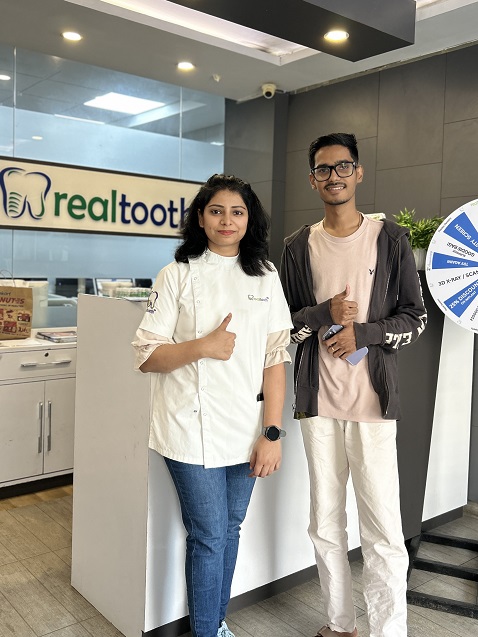
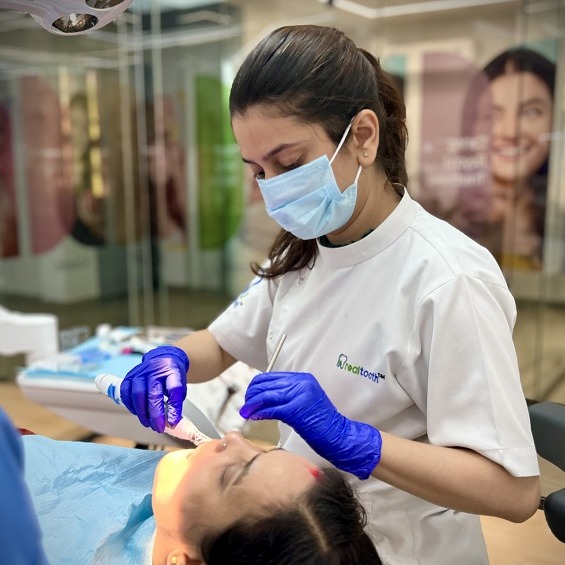
For patients with gingivitis or plaque and calculus accumulation, treatment may begin with professional cleaning.
This can include:
The purpose is not simply cleaner-looking teeth. The primary objective is to reduce inflammation and create an oral environment the patient can maintain effectively.
Deep Cleaning / Non-Surgical Periodontal Therapy
When disease extends below the gum line, deeper periodontal treatment may be required. After treatment, tissues are reviewed to assess recovery, as some areas improve sufficiently while others may require further management.
This may involve:- Subgingival instrumentation
- Root-surface debridement
- Removal of deeper deposits
- Inflamed periodontal pockets
- Personalised hygiene instruction
Periodontal Re-Evaluation
Assessing tissue response post-treatmentGum treatment should not end immediately after cleaning. Re-evaluation allows our periodontal team to measure recovery progress and customize the precise next steps for long-term health.
- Bleeding reduction
- Pocket-depth changes
- Gum inflammation levels
- Oral hygiene evaluation
- Tooth mobility check
- Persistent disease tracking
Periodontal Surgery
Advanced care for deep periodontal defectsWhen deeper periodontal defects cannot be adequately managed through non-surgical care alone, surgical treatment is recommended according to strict clinical need rather than routine protocol.
- Deeper cleaning access
- Pocket reduction
- Improved gum architecture
- Management of bone defects
- Enhanced cleaning access
- Tooth maintenance support
Regenerative Periodontal Treatment
Restoring lost bone and supporting structuresCertain periodontal defects may be suitable for regenerative techniques aimed at restoring lost support structures. Case selection is carefully evaluated based on patient anatomy.
- Bone grafting materials
- Regenerative membranes
- Biologically supportive elements
- Targeted surgical precision
Gum Recession Treatment
Identifying and managing exposed root surfacesGum recession occurs when the margin moves away from its position, exposing root surfaces. Treatment begins by thoroughly identifying underlying causes like gum disease, tooth position, or brushing trauma.
- Teeth appearing longer
- Root sensitivity
- Uneven gum line
- Thin gum tissue
- Traumatic brushing
- Orthodontic/Anatomical factors
Gum Grafting & Root Coverage
Soft-tissue enhancement for root protectionSelected recession cases benefit from soft-tissue grafting to increase tissue volume and protect tooth roots, with achievable coverage customized according to individual anatomy.
- Increased tissue thickness
- Exposed root coverage
- Improved tissue stability
- Reduced tooth sensitivity
- Enhanced aesthetics
- Restorative/Implant support
The Periodontal Care Workflow
Structured Treatment Pathway
Treat Heal Measure Again Decide What Is Still Required
Periodontal therapy is a continuous, measured journey to ensure long-term stability and prevent disease recurrence.
Realtooth USP: Periodontics + Smile Design
The gum line forms the frame around the teeth. Sometimes a patient's concern is not only tooth color or tooth shape, but also the overall aesthetic harmony of the gum line. Periodontal treatment is an integral component of comprehensive smile design.
Common Aesthetic Concerns We Address:
The Realtooth Approach:
By combining periodontal expertise with digital smile planning, we shape healthy, symmetrical gum architecture that enhances both aesthetics and functional longevity.
Gum Contouring
Selected patients may benefit from conservative gum reshaping to improve symmetry, tooth proportions, and overall smile balance. The degree of modification is precisely evaluated based on individual anatomy.
Often Considered Alone or Alongside:
- Porcelain Veneers
- Dental Crowns
- Composite Bonding
- Comprehensive Smile Design
Biological Precision:
Reshaping is performed with careful consideration of tissue biological width to ensure long-term health and stability.
Crown Lengthening
Sometimes additional tooth structure needs to be exposed for functional or aesthetic needs. Crown lengthening involves reshaping gum tissue and, when necessary, supporting bone in coordination with restorative dentists.
Dual Clinical Objectives:
Collaborative Planning:
Planned hand-in-hand with restorative specialists for seamless foundation building.
Periodontics Before Veneers & Cosmetic Dentistry
Prior to cosmetic enhancements, specialized periodontal therapy ensures treatment starts from a healthy, predictable foundation:
- Control Bleeding: Prevents tissue fluid interference during procedures.
- Improve Gum Health: Eliminates subgingival bacteria and inflammation.
- Stabilise Gum Line: Ensures long-term gingival position around restorations.
- Better Margins: Allows precise margin placement for cosmetic veneers.
- Aesthetic Symmetry: Harmonizes the gingival frame around new teeth.
Periodontics Before Crowns & Bridges
Inflamed or unhealthy gums can significantly compromise complex restorative workflows. Pre-restorative periodontal treatment resolves issues that affect:
- Tooth Preparation: Enables clean, visible margin preparation.
- Digital Scanning & Impressions: Ensures pinpoint accuracy without fluid distortion.
- Crown Margins: Secures optimal marginal fit and sealing.
- Cementation: Ensures dry, uncontaminated conditions for high-bond strength.
- Long-Term Maintenance: Simplifies daily hygiene and prolongs restoration lifespan.
Periodontal treatment may therefore form part of the pre-restorative phase before complex crown and bridge treatment.
Realtooth USP: Periodontics + Dental Implants
Implant dentistry is inseparable from periodontal health. Active periodontal disease may require treatment before implant placement. An implant should not be placed into a mouth where uncontrolled periodontal disease is being ignored.
Before implant treatment, we thoroughly evaluate:
Soft-Tissue Management Around Implants
The gum around an implant influences aesthetics, cleaning, patient comfort, and long-term tissue stability.
Periodontal techniques may therefore be used before, during or after implant treatment to improve:
- Tissue volume
- Gum contour
- Cleaning access
- Soft-tissue architecture
Aesthetic Zone Priority
This becomes particularly critical for implants located in the front aesthetic zone.
Peri-Implant Health & Maintenance
Implants do not develop cavities, but the tissues around them can develop inflammation and disease.
Peri-Implant Mucositis
Inflammation of the soft tissue around an implant.
Peri-Implantitis
Inflammation associated with progressive loss of supporting bone around an implant.
Signs may include:
Early assessment is important.
Realtooth Implant Maintenance Programme
Patients with:
- Single implants
- Multiple implants
- Implant bridges
- All-on-4® restorations
- Full-arch implant prostheses
may require customised periodontal and hygiene maintenance.
The programme may include:
- Plaque assessment
- Gum evaluation
- Professional implant cleaning
- Prosthetic cleaning assessment
- Bite review
- Radiographic assessment when indicated
- Reinforcement of home-care techniques
Implant placement is a treatment event. Implant maintenance is a lifelong responsibility.
Periodontics & Orthodontics
Healthy gums and adequate bone support are important before moving teeth orthodontically.
Before:
- Clear aligners
- Invisalign®
- Fixed braces
patients with active periodontal disease may first require periodontal stabilisation.
During orthodontic treatment, the team may monitor:
- Gum inflammation
- Recession
- Oral hygiene
- Bone support
This is especially important for adult orthodontic patients with previous periodontal problems
Realtooth USP: Orthodontic-Periodontal Collaboration
Some complex cases require more thoughtful treatment than simply "straightening the teeth."
Crowding + Recession
Managing space loss while protecting delicate soft tissue boundaries.
Periodontal Bone Loss + Tooth Migration
Aligning teeth safely within compromised bone support levels.
Orthodontic Need + Thin Gum Tissue
Ensuring tissue thickness is reinforced during active movement.
Realtooth's multidisciplinary environment allows orthodontic and periodontal teams to coordinate tooth movement with tissue health.
"Move the tooth—but protect the foundation supporting it."
Periodontics in Full-Mouth Rehabilitation
Patients requiring comprehensive rehabilitation often present with multiple problems:
The periodontal team can help determine key clinical outcomes:
- Missing teeth
- Loose teeth
- Gum disease
- Worn teeth
- Failed crowns
- Implants
- Bite changes
Before reconstructing the mouth, each tooth needs a prognosis.
This information becomes part of the overall rehabilitation plan.
Realtooth USP: Save Strategic Teeth Whenever Possible
A loose tooth does not automatically need extraction. Its prognosis depends on several clinical factors.
Some compromised teeth may still provide useful long-term function after appropriate periodontal treatment.
Its prognosis depends on:
Gum Disease & Diabetes
Periodontal health and systemic health can influence one another.
Periodontal Care for Diabetic Patients
Careful Medical History
Understand relevant medical conditions and current health management.
Disease-Control Discussion
Discuss how diabetes management may affect periodontal health and treatment planning.
Structured Maintenance
Plan follow-up visits according to periodontal condition and individual needs.
Physician Coordination
Coordinate with the patient's physician when appropriate.
Smoking & Gum Disease
Smoking can increase the risk and severity of periodontal disease and can affect healing.
Risk Assessment
Smoking status is considered when evaluating periodontal risk.
Treatment Prognosis
Smoking may affect healing and the expected response to treatment.
Implant Planning
Smoking history is relevant to implant risk assessment and planning.
Maintenance Frequency
Follow-up intervals are planned according to individual periodontal needs.
Smoking cessation support may be recommended as part of long-term periodontal care.
Bad Breath & Periodontal Health
Persistent bad breath may sometimes be associated with underlying periodontal issues that require proper evaluation.
Persistent bad breath may often be linked to:
- Gum disease
- Plaque accumulation
- Calculus deposits
- Deep periodontal pockets
- Food retention
Periodontal treatment can help when these are contributing causes. However, bad breath may have multiple origins, so persistent symptoms require proper assessment.
Loose Teeth & Management
Identifying the root cause of tooth mobility is essential for determining the right clinical approach.
Tooth mobility may result from:
- Periodontal bone loss
- Infection
- Excessive bite forces
- Trauma
- Other underlying conditions
In selected cases, management may include:
- Periodontal treatment
- Bite management
- Splinting
- Restorative treatment
- Extraction when prognosis is hopeless
Note: The objective is not simply to stop movement—it is to understand why the tooth became mobile.
Laser-Assisted Periodontal Care
Realtooth has incorporated dental laser technology into its clinical ecosystem for many years.
In selected periodontal procedures, laser technology may be used as an adjunct where clinically appropriate.
Possible applications depend on the case and may include selected:
A laser is a tool—not a substitute for diagnosis, infection control or sound periodontal principles. The technique is selected according to the patient's clinical requirement.
Minimally Invasive Periodontal Philosophy
Modern periodontal care increasingly focuses on preserving tissues wherever possible.
Depending on the problem, treatment options may involve:
- Conservative non-surgical treatment
- Focused surgical access
- Microsurgical principles
- Regenerative techniques
- Careful soft-tissue management
- Digital restorative integration
Our goal is not to perform the most aggressive procedure available—it is to achieve the required biological result with an appropriate level of intervention.
Periodontal Maintenance Therapy
This is one of the most important—but frequently neglected—parts of periodontal treatment. After active treatment, disease can recur without proper ongoing maintenance.
Maintenance Appointments Include:
Essential components of post-treatment care-
Gum Examination
-
Periodontal Measurements
-
Professional Cleaning
-
Reinforcement of Home Care
-
Monitoring High-Risk Sites
Additional Evaluation Steps:
Targeted diagnostics when indicated-
Implant Evaluation
-
Radiographs (When Indicated)
-
Customized Recall Planning
-
Prevention of Disease Recurrence
The maintenance recall interval depends strictly on the patient's individual risk factors.
Realtooth USP: Risk-Based Preventive Maintenance
We do not believe every patient needs the same recall interval. Maintenance frequency may depend on individual clinical risk parameters:
A patient with significant previous periodontal disease may require closer monitoring than someone with consistently healthy gums.
Key Principle: Maintenance should follow risk—not simply the calendar.
The Realtooth Periodontal Workflow
A comprehensive periodontal case moves through structured biological steps:
Diagnose
Understand gum health, bone support, and risk factors.
Control Disease
Reduce inflammation, plaque, and infection.
Re-Evaluate
Measure how the tissues respond to initial treatment.
Treat Residual Problems
Provide advanced or surgical periodontal treatment where necessary.
Support Other Dentistry
Prepare stable tissues for implants, orthodontics, crowns, or cosmetic treatment.
Rehabilitate
Integrate periodontal health with the complete restorative plan.
Maintain
Create a personalised long-term periodontal recall programme.
Structured clinical care aimed at long-term tissue stability and tooth retention.
Minimally Invasive Periodontal Philosophy
Modern periodontal care increasingly focuses on preserving tissues wherever possible.
Depending on the problem, this may involve:
- Conservative non-surgical treatment
- Focused surgical access
- Microsurgical principles
- Regenerative techniques
- Careful soft-tissue management
- Digital restorative integration
Our goal is not to perform the most aggressive procedure available. It is to achieve the required biological result with an appropriate level of intervention.
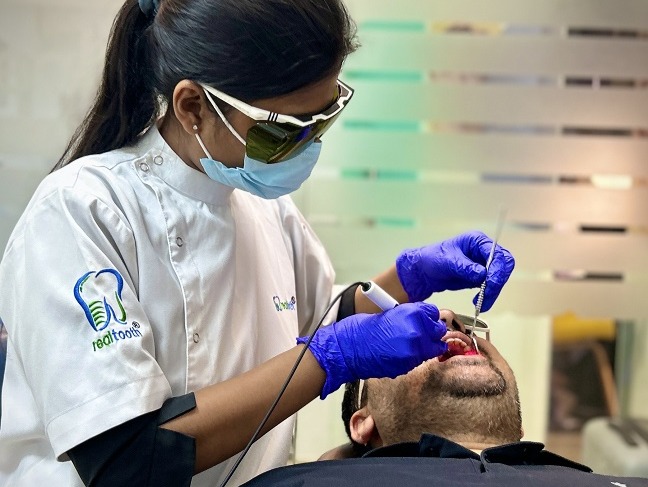
Periodontal Maintenance Therapy
This is one of the most important—but frequently neglected—parts of periodontal treatment.
After active treatment, disease can recur without structured ongoing maintenance.
Maintenance appointments may include:
- Gum examination
- Periodontal measurements where required
- Professional cleaning
- Reinforcement of home care
- Monitoring of high-risk sites
- Implant evaluation
- Radiographs when indicated
Note: The recall interval depends strictly on the patient's individual risk factors.
Realtooth USP: Risk-Based Preventive Maintenance
We do not believe every patient needs the same recall interval.
Maintenance frequency may depend on:
- Previous periodontitis
- Smoking
- Diabetes
- Oral hygiene
- Number of implants
- Extensive crowns and bridges
- Previous bone loss
- Disease progression risk
A patient with significant previous periodontal disease may require closer monitoring than someone with consistently healthy gums.
Maintenance should follow risk—not simply the calendar.
Periodontics as Part of Realtooth Lifelong Dental Care
Realtooth's long-term objective is to guide every patient seamlessly through a continuum of care. Periodontics plays a central role throughout that journey:
For many long-term patients, periodontal maintenance becomes one of the most important ways of protecting the dentistry they have already received.
The Realtooth Advanced Periodontal Ecosystem
One specialty supporting almost every stage of comprehensive dentistry.
Periodontal Diagnosis
Gum Examination + Periodontal Measurements + Digital Imaging
Disease Control
Professional Cleaning + Non-Surgical Periodontal Therapy
Advanced Periodontics
Periodontal Surgery + Regeneration + Soft-Tissue Procedures
Supporting Complex Dentistry
Implants + Orthodontics + Smile Design + Crowns + Full-Mouth Rehabilitation
Maintenance
Periodontal Recall + Implant Hygiene + Preventive Monitoring
Why Choose Realtooth for Periodontal Care?
Comprehensive, specialist-led, and integrated gum care tailored to your biological needs.
Integrated with Comprehensive Dentistry
Gum treatment is connected with the patient's entire dental plan rather than performed in isolation.
Specialist Periodontal Expertise
Advanced cases can receive the appropriate level of specialist periodontal assessment and treatment.
Advanced Diagnostic Technology
Digital radiography, OPG, CBCT, and digital records are available where clinically indicated.
Implant-Periodontal Integration
Soft-tissue, bone, and implant maintenance are considered as part of one unified biological system.
Periodontics + Smile Design
Gum contour, tissue health, and tooth proportions can be integrated into cosmetic treatment planning.
Periodontics + Orthodontics
Gum and bone health can be monitored continuously during adult orthodontic and aligner treatment.
Regenerative & Soft-Tissue Procedures
Advanced periodontal procedures can be incorporated according to defect type and biological requirement.
Laser Technology Where Appropriate
Modern soft-tissue techniques can be incorporated as adjuncts when clinically beneficial.
Preventive & Maintenance Focus
Periodontal care continues after active treatment through structured risk-based recall programmes.
Multispeciality Collaboration
Periodontal care works alongside under one Realtooth ecosystem:
- Implantology & Prosthodontics
- Endodontics & Oral Surgery
- Orthodontics & Cosmetic Dentistry
- General Dentistry
Frequently Asked Questions
What Determines the Cost of Periodontal Treatment?
Cost may depend on:
- Type and severity of gum disease
- Number of areas involved
- Non-surgical vs surgical treatment
- Bone or soft-tissue procedures
- Regenerative treatment requirements
- Implant involvement & peri-implant health
- Diagnostic imaging requirements
A personalised treatment plan and estimate are provided after a comprehensive periodontal assessment.
₹ 500
₹ 2,000 onwards
₹ 5,000 onwards
₹ 8,000 onwards
₹ 3,500 onwards
₹ 1,500 onwards
Don't Wait Until Teeth Become Loose
Early periodontal care preserves treatment options.
Early Warning Signs:
- Bleeding gums while brushing
- Swelling & tenderness
- Persistent bad breath
- Gum recession (teeth looking longer)
Before Advanced Symptoms:
- Irreversible periodontal bone loss
- Increased tooth mobility
- Unplanned tooth loss
Saving teeth is easier when we protect the tissues supporting them before severe damage occurs.
Healthy Gums Are the Foundation of Advanced Dentistry
Whether you need treatment for gum disease or are planning Implants | Aligners | Veneers | Crowns | Bridges | Smile Design | Full-Mouth Rehabilitation, periodontal health is an essential part of achieving predictable long-term results.
Need Specialist Periodontal Evaluation?
At Realtooth, periodontics works seamlessly across diagnosis, disease control, surgical care, and long-term maintenance to protect both natural teeth and advanced restorative work.