Wisdom Tooth Removal at Realtooth
Remove Only When Needed. Plan Safely. Protect the Surrounding Structures.
Wisdom teeth do not always need to be removed. But when they are impacted, infected, repeatedly painful or damaging nearby teeth, removal may become the most appropriate treatment.
Careful Assessment Of:
At Realtooth, wisdom tooth removal begins with a thorough diagnostic evaluation:
- Tooth Position
- Root Anatomy
- Bone & Nerve Relationship
- Infection & Nearby Teeth
- Surgical Difficulty
Advanced Care & Diagnostics
Combining technology & expertise at RealtoothOur goal is not simply to extract the tooth, but to understand the anatomy, reduce avoidable risk, perform the surgery appropriately, and support comfortable healing.
Realtooth combines modern technology and expert surgical care for both routine and complex wisdom tooth cases.
What Are Wisdom Teeth?
Wisdom teeth, also known as third molars, are the last teeth to develop at the back of the mouth. Some wisdom teeth erupt normally and function without problems, while others face developmental challenges.
Common Wisdom Tooth Eruption Conditions:
- Remain completely buried in bone/gum
- Erupt only partially through the gums
- Grow at awkward angles
- Become trapped against adjacent teeth
- Lack sufficient space to erupt properly
Clinical Classification:
- Impacted Wisdom Teeth: Teeth unable to fully erupt into normal position.
- Functional Teeth: Properly erupted and easily cleanable teeth.
- Asymptomatic Impaction: Impacted teeth not currently causing active pain.
Important Note: The presence of a wisdom tooth alone is not automatically a reason for removal.
Do All Wisdom Teeth Need to Be Removed?
No. At Realtooth, we remove wisdom teeth because there is a clear clinical reason—not simply because they exist.
When Removal Is NOT Needed (Monitor Only)
A healthy wisdom tooth may simply be monitored if it:
- Has erupted properly into position
- Can be cleaned effectively with daily care
- Is completely free of disease or decay
- Is not damaging neighbouring teeth or structures
When Removal May Be Considered
Extraction is evaluated when associated with:
- Repeated pain or recurrent swelling
- Gum infection (Pericoronitis)
- Food trapping and persistent decay
- Damage or decay to the second molar
- Cystic changes or bone damage
- Difficult cleaning or severe impaction
Realtooth helps patients evaluate the health, positioning, and long-term risks associated with wisdom teeth through clinical precision.
Common Symptoms of Wisdom Tooth Problems
You may need an assessment if you experience any of the following signs or discomfort at the back of your jaw.
Wisdom tooth issues often manifest through distinct symptoms around the affected area:
- Pain at the back of the jaw
- Swelling around the last tooth
- Difficulty opening the mouth
- Pain while chewing
- Repeated gum swelling
- Bad taste in the mouth
- Food getting trapped behind the last molar
- Pain radiating towards the ear or jaw
- Gum flap over a partially erupted wisdom tooth
- Recurrent infection
Some impacted wisdom teeth may cause little or no pain despite developing problems around neighbouring structures. This is why clinical examination and imaging may be necessary.
What Is an Impacted Wisdom Tooth?
A wisdom tooth is described as impacted when it cannot erupt normally into its proper position.
Impaction occurs because of:
- Lack of space in the jaw
- Abnormal tooth position
- Bone obstruction blocking path
- Another tooth blocking its eruption path
Types of Impaction Positions:
Impaction can occur in different directions, such as:
- Vertically impacted
- Angled forward (Mesioangular)
- Angled backward (Distoangular)
- Horizontally positioned
- Partially erupted
- Completely buried in bone
Note: The type and orientation of impaction directly influence the surgical approach and planning.
When Might Wisdom Tooth Removal Be Recommended?
Removal may be considered when a wisdom tooth causes or directly contributes to clinical complications and discomfort.
Recurrent Gum Infection
Partially erupted wisdom teeth can develop repeated inflammation and pericoronitis around the surrounding gum tissue.
Tooth Decay
The far-back location makes brushing and flossing difficult, drastically increasing the risk of cavities on the wisdom tooth.
Damage to Neighbouring Tooth
An impacted wisdom tooth may push against the adjacent second molar, creating hard-to-clean areas, decay, gum issues, or structural damage.
Repeated Pain or Swelling
Recurring episodes of jaw pain, throbbing discomfort, or soft tissue swelling suggest an underlying issue that requires evaluation.
Cyst or Other Pathology
In selected cases, the developmental sac around an impacted tooth can fill with fluid, forming a cyst or causing bone degradation.
Orthodontic or Surgical Planning
In some situations, wisdom tooth removal is strategically incorporated into a wider orthodontic alignment or jaw surgery plan.
Clinical Assessment Note: Every situation is evaluated individually using 3D CBCT scans or digital X-rays to determine whether active treatment or conservative monitoring is best for your long-term oral health.
The Realtooth Approach to Wisdom Tooth Removal
Our structured clinical workflow is designed to prioritize accurate diagnostics, patient comfort, and safe, predictable outcomes.
Understand the Symptoms
Detailed discussion of current pain, swelling, difficulty chewing, or past infection episodes.
Clinical Examination
Thorough intraoral check of gum health, second molar condition, and available jaw space.
Digital X-Ray / OPG
Panoramic imaging to evaluate root structures, eruption angles, and overall jaw relationships.
3D CBCT if Required
Advanced 3D scan used for complex cases to precisely map the tooth position relative to nerve canals.
Assess Impaction and Risk
Evaluating surgical difficulty, potential risks, and determining the safest approach for removal.
Plan Simple or Surgical Removal
Customizing the step-by-step extraction technique based on the position and angle of the tooth.
Appropriate Anaesthesia
Administering targeted local anaesthesia to ensure a completely painless procedure experience.
Careful Surgical Extraction
Gentle removal of the wisdom tooth while protecting surrounding jawbone and neighbouring structures.
Socket Management and Sutures if Required
Cleaning the extraction site thoroughly and placing sutures if needed to promote smooth healing.
Post-Operative Instructions
Providing clear, written home-care guidelines, medications, and diet care for quick recovery.
Follow-Up
Monitoring site healing, suture removal (if non-resorbable), and ensuring comfortable long-term recovery.
Realtooth USP: Imaging Before Complex Surgery
Wisdom tooth surgery should be planned according to anatomy. Depending on the case, we may use Digital dental X-rays, OPG / panoramic imaging, or 3D CBCT.
These can help the surgical team assess:
Depending on the case, we may use:
-
Digital Dental X-Rays
-
OPG / panoramic imaging
-
3D CBCT Imaging
The more complex the anatomy, the more important it becomes to understand it before surgery.
Realtooth USP: 3D CBCT in Selected Cases
Some lower wisdom teeth lie close to the nerve supplying sensation to the lower lip and chin.
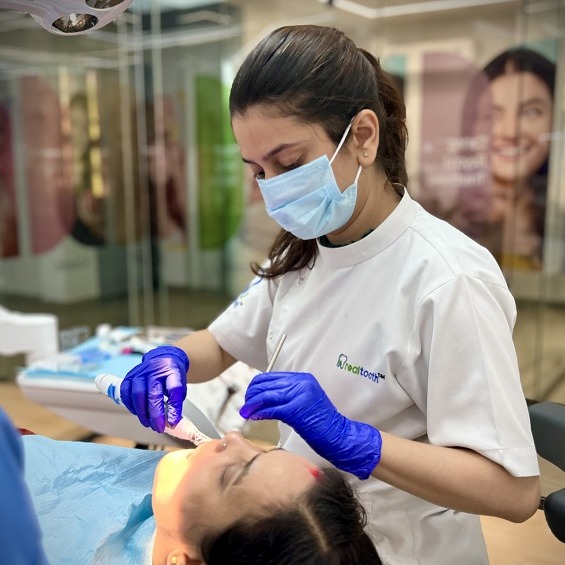
Conventional X-rays suggest proximity, but 3D CBCT provides critical depth details.
In selected cases, CBCT may help evaluate:- Whether roots contact the nerve canal
- Whether the nerve passes beside or between roots
- Bone thickness
- Root morphology
- Surgical difficulty
- Upper wisdom tooth relationship with the maxillary sinus
CBCT is not required for every wisdom tooth. It is used when the clinical check justifies additional 3D information.
Why the Nerve Relationship Matters
The roots of lower wisdom teeth can sometimes lie close to the inferior alveolar nerve.
-
Lower Lip
-
Chin
-
Lower Jaw region
If surgery is complex, temporary or, rarely, persistent sensory changes can occur.
This is why appropriate imaging, surgical planning and informed consent are important before removing high-risk impacted wisdom teeth.
Good surgery begins with understanding not only the tooth—but what surrounds it.

Realtooth USP: Oral Surgery Expertise
Some wisdom teeth can be removed easily, while others require advanced surgical intervention. Realtooth's multispeciality team manages complex surgical cases including:
Simple extraction and complex oral surgery should not be treated as the same procedure.
Simple vs Surgical Wisdom Tooth Removal
Understanding the right approach based on your individual anatomical needs.
Simple Extraction
For erupted & accessible teethIf the wisdom tooth has erupted sufficiently and can be accessed easily, it may be removed through a relatively straightforward extraction without bone removal.
Surgical Wisdom Tooth Removal
- Impacted / Deep
- Partially Erupted
- Covered by Bone
- Angulated Position
- Surgical gum access & flap creation
- Limited bone removal for access
- Controlled sectioning of tooth
- Suturing the surgical site
The exact surgical technique and approach depend entirely on your unique anatomy.
Why Wisdom Teeth Are Sometimes Sectioned
Patients sometimes become concerned when told that a tooth may need to be divided during removal.
This may help reduce unnecessary force on:
- Surrounding bone
- Neighbouring teeth
- Soft tissues
In selected impacted cases, sectioning the tooth can actually allow it to be removed in smaller, controlled portions.
The objective is not always to remove the wisdom tooth “in one piece.”
The objective is to remove it safely and efficiently according to the anatomy.
Is Wisdom Tooth Removal Painful?
The procedure is performed using appropriate local anaesthesia.
During surgery, patients may feel pressure or movement, but sharp pain should be controlled.
After the anaesthesia wears off, temporary:
The amount of discomfort depends on:
- Depth of impaction
- Surgical complexity
- Number of teeth removed
- Individual healing response
Appropriate post-operative instructions and medication are provided according to the case.
What Should I Expect After Wisdom Tooth Surgery?
Recovery differs between patients. Common short-term experiences can include:
Swelling
Often more noticeable after surgical removal.
Mild Bleeding
A small amount may occur in the early period.
Jaw Stiffness
Opening the mouth may temporarily feel restricted.
Tenderness
The surgical area may remain sensitive for several days.
These symptoms should gradually improve. If pain or swelling becomes progressively worse rather than better, the patient should contact the dental team.
What Is Dry Socket?
Dry socket is a painful complication that can occur when the protective blood clot in the extraction socket is lost or breaks down prematurely.
Symptoms may include:
Risk can increase with factors such as smoking and disturbance of the extraction site.
Dry socket requires professional assessment and local management.
Wisdom Tooth Infection – Pericoronitis
When a wisdom tooth erupts only partially, a flap of gum may remain over part of the tooth.
Food and bacteria can become trapped under this area, causing inflammation known as pericoronitis.
Initial management depends on the severity of infection. If episodes repeatedly return, removal of the wisdom tooth may be recommended.
Timely clinical evaluation helps prevent recurrent pain and infection spreading to surrounding tissues.
Symptoms May Include:
- Pain & Swollen Gum
- Bad Taste in the Mouth
- Difficulty Opening the Mouth
- Pain While Swallowing
- Recurrent Swelling
Should an Infected Wisdom Tooth Be Removed Immediately?
It depends on the clinical condition. In some cases, the tooth can be removed during the symptomatic episode. In others, the dentist may first manage:
- Acute infection & Swelling
- Mouth opening limitations
- General medical condition
Definitive removal is performed after the acute phase improves. The decision should always be individualised.
Can Antibiotics Cure a Wisdom Tooth Problem?
Antibiotics may be prescribed in selected spreading or systemic infections. However, antibiotics do not necessarily correct the underlying cause if:
- The tooth remains impacted
- Food continues to trap under the gum
- Gum infection repeatedly returns
- Tooth decay is present
Repeated courses of antibiotics without treating the source are usually not a long-term solution.
Can Wisdom Teeth Damage the Tooth in Front?
Yes, in selected cases.
Impacted wisdom teeth can contribute to problems around the second molar, making imaging essential to evaluate both teeth.
Food Trapping
Gum Disease
Tooth Decay
Root Damage
Upper vs Lower Wisdom Tooth Removal
Understanding the anatomical differences and surgical considerations between upper and lower third molars.
Upper Wisdom Tooth Removal
Upper wisdom teeth can sometimes be simpler to remove than lower impacted wisdom teeth, but treatment depends on:
- Tooth position
- Root anatomy
- Bone density
- Sinus relationship
The maxillary sinus can lie close to the roots of upper wisdom teeth in some patients. Imaging helps assess this relationship when relevant.
Lower Wisdom Tooth Removal
Lower wisdom teeth can be more complex due to surrounding anatomical structures and bone density:
- Dense surrounding bone
- Impaction patterns
- Root anatomy
- Proximity to the inferior alveolar nerve
Detailed planning and 3D imaging become particularly important for deeply impacted lower third molars.
Removing All Four Wisdom Teeth
Some patients have multiple wisdom teeth requiring removal. The plan can be customized according to individual patient needs.
Removal options may include:
- One tooth at a time
- One side at a time (upper & lower)
- Multiple teeth during one treatment session
Realtooth's multispeciality environment ensures customized surgical plans tailored for safety, comfort, and smooth recovery.
Treatment decisions depend on:
- Surgical difficulty
- Overall patient health
- Severity of symptoms
- Recovery considerations
- Clinical judgment
Wisdom Tooth Removal for Young Adults
Wisdom tooth problems commonly appear during late adolescence and early adulthood.
Younger patients frequently seek evaluation because of:
Treatment should always be based on individual clinical need rather than age alone.
Wisdom Teeth & Orthodontics
Wisdom teeth are sometimes discussed in relation to crowding after braces.
However, orthodontic relapse has multiple causes, and wisdom teeth are not automatically responsible for all post-treatment crowding.
Tooth Position
Tooth Health
Active Pathology
Risk to Surrounding Teeth
The decision to extract should be based on these specific clinical indicators rather than assuming removal is mandatory simply because orthodontic treatment was completed.
What Happens During Wisdom Tooth Removal at Realtooth?
Our step-by-step approach to safe, precise, and comfortable wisdom tooth care.
Step 1 – Consultation
We understand:
- Pain
- Swelling
- Previous episodes
- Medical history
- Previous treatment
Step 2 – Clinical Examination
The dentist evaluates:
- Eruption status
- Gum condition
- Neighbouring tooth
- Mouth opening
- Infection
Step 3 – Imaging
Depending on the case, we may use:
- Dental X-ray
- OPG
- CBCT
Step 4 – Surgical Risk Assessment
We assess:
- Impaction
- Root anatomy
- Nerve proximity
- Sinus relationship
- Surgical difficulty
Step 5 – Anaesthesia
Appropriate local anaesthesia is administered to ensure a completely painless experience during the procedure.
Step 6 – Removal
The tooth is carefully removed using the planned simple or surgical technique based on individual evaluation.
Step 7 – Socket Care
The extraction site is thoroughly cleaned and sutures may be placed where appropriate to facilitate optimal healing.
Step 8 – Post-Operative Instructions
The patient receives detailed guidance regarding:
- Bleeding & swelling
- Food & activity
- Oral hygiene & medication
- Warning signs
Step 9 – Follow-Up
Surgical cases may require a follow-up review and suture removal where necessary to ensure complete recovery.
After Wisdom Tooth Removal: Important Care
Patients should follow the personalised instructions provided by their treating clinician.
Common post-operative recommendations include:
- Apply pressure to gauze as directed
- Avoid vigorous rinsing initially
- Avoid repeatedly touching the socket
- Eat a softer diet initially
- Maintain oral hygiene carefully
- Avoid smoking
- Avoid heavy physical exertion early on
- Take prescribed medication as directed
Good post-operative care contributes to smoother healing.
When Should You Contact Realtooth After Surgery?
Contact the team if you experience:
- Heavy bleeding that does not settle
- Severe pain that is increasing
- Progressive swelling
- Fever
- Difficulty swallowing
- Difficulty breathing
- Significant pus or discharge
- Persistent or concerning numbness
- Symptoms that do not improve as expected
Realtooth Difference in Wisdom Tooth Surgery
Advanced diagnostics, surgical expertise, and a patient-first approach to wisdom tooth management.
We Don't Remove Every Wisdom Tooth
Treatment begins with assessing whether removal is actually required.
Digital Imaging
X-rays and panoramic imaging help evaluate tooth position and surrounding anatomy.
CBCT 3D Assessment
Three-dimensional CBCT imaging supports planning when nerve, sinus, or complex root anatomy needs detailed clarification.
Oral Surgery Expertise
Complex impacted wisdom teeth are managed with specialized surgical expertise.
Risk-Based Planning
Surgical strategy is customized according to the individual impaction rather than using one standard technique for every tooth.
Anatomical Consideration
planning considers :
Structured Post-Operative Care
Treatment includes recovery instructions, warning signs and appropriate follow-up.
Multispeciality Support
If wisdom tooth issues are linked to adjacent decay, gum disease, cysts, or root canals, treatment is seamlessly coordinated within Realtooth.
Patient Safety & Comfort
From gentle anesthesia protocols to post-surgical check-ins, your comfort and safety remain our top priorities.
Frequently Asked checks
What Determines Wisdom Tooth Removal Cost?
The cost depends on:
- Erupted vs impacted tooth
- Depth of impaction
- Tooth angulation
- Root anatomy
- Simple vs surgical removal
- Relationship to nerve or sinus
- Need for specialist surgery
- Imaging requirements
₹ 3,000 onwards
₹ 5,000 onwards
₹ 8,000 onwards
A personalised estimate is provided after clinical and radiographic assessment.
Don't Choose Wisdom Tooth Surgery Based Only on Price
Before treatment, ask the right checks. At Realtooth, these are answered before the surgical plan is finalised.
- Does this wisdom tooth actually need removal?
- Is it simple or impacted?
- How close are the roots to the nerve or sinus?
- Do I need a 3D CBCT?
- Is the neighbouring tooth already affected?
- Who should perform the surgery?
- What should I expect during recovery?
Wisdom Tooth Pain or Recurrent Swelling?
Start with an assessment—not an automatic extraction. Let the Realtooth team evaluate: